

Senna Leaf



*For retail orders only. See our return policy for more details.
Senna leaf, also known as locust plant, is a member of the pea family that is native to Egypt and cultivated in several other tropical countries, including India and Somalia. Because the herb was transported across the Mediterranean Sea to Europe and Asia via the Egyptian seaport of Alexandria, senna is also known as Egyptian Senna and Alexandrian Senna.
The leaves and the fruit of the plant are used to make medicine. The active compounds in senna are a group of glycosides collectively referred to as sennosides. These compounds interact with fatty acids in the intestinal tract to promote digestion, while relaxing the smooth muscle of the intestines to increase transit time. Senna is an FDA-approved nonprescription laxative. It is used to treat constipation and also to clear the bowel before diagnostic tests such as colonoscopy. Senna is also used for irritable bowel syndrome (IBS), hemorrhoids, and weight loss.
Whole senna leaf is traditionally used to make teas, infusions and tisanes. Senna is primarily steeped as an herbal tea and is well known as a powerful laxative.
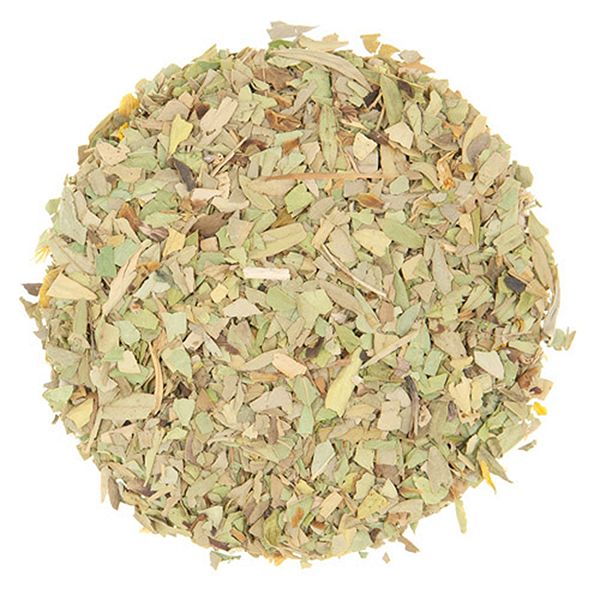
Appearance, aroma and taste profile: Elongated, pale green leaf. Senna leaf tastes bitter and unpleasant. Combine the herb with ginger or fennel to enhance flavor when taken as tea.
Botanical Name: Senna alexandrina
Common Names: American senna, locust plant, wild senna, Alexandrian Senna, Egyptian Senna
| Form Factor | Cut Sifted, Powder |
|---|---|
| Botanical Name | Senna alexandrina |
| Common Names | American senna, locust plant, wild senna, Alexandrian Senna, Egyptian Senna |
| Appearance, Aroma and Taste Profile | Elongated, pale green leaf. Senna leaf tastes bitter and unpleasant. Combine the herb with ginger or fennel to enhance flavor when taken as tea. |


Log In
Create New Account